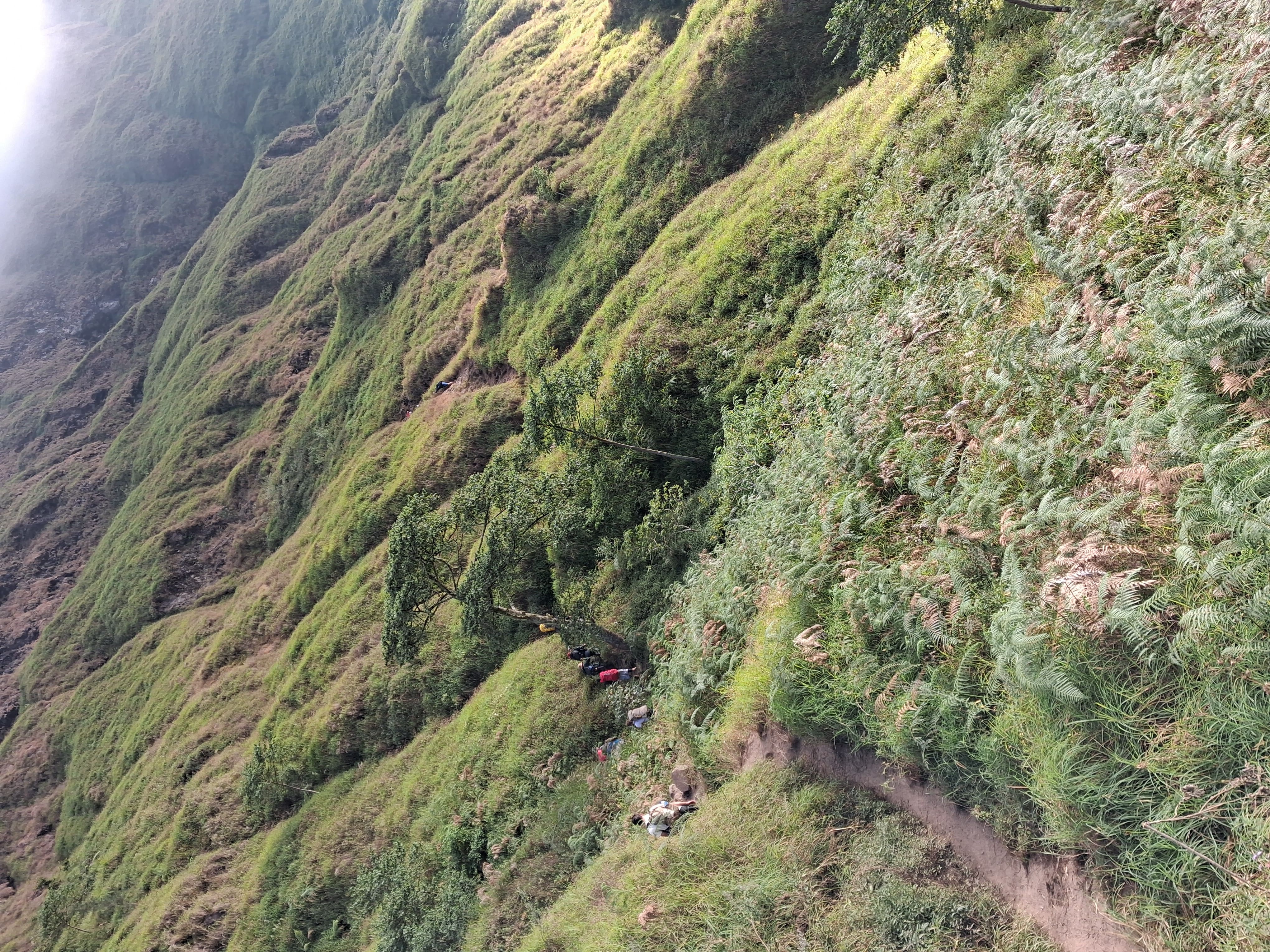
Planning an expedition to Mount Rinjani requires precise timing. Weather determines trail accessibility, campsite comfort, and summit visibility.
1. The Dry Season (April to October) — Peak Window
The dry season is universally considered the best window to trek Mount Rinjani:
- April to May: The trails open officially after rainy season closures. The landscape is lush green, temperatures are moderate, and crowd levels are relatively balanced.
- July to August: The driest months with virtually zero rainfall. Excellent summit visibility across Bali and Sumbawa[cite: 1], but nights on crater rims can drop down near 0°C to 5°C. This is peak international trekking season.
- September to October: Savannas transition to a rustic golden hue. Warm dry days with crisp star-filled night skies.
2. The Transition & Rainy Season (November to December)
Short afternoon rain showers become common. Trekking is still possible, but hikers must carry dependable waterproof gear, thermal base layers, and trail gaiters.
3. Annual Park Closure (January to March)
Mount Rinjani National Park is closed by park authorities from January through March for eco-restoration and severe monsoon rains. Plan your holiday window outside these closure months.